------|-----------------|---------------|
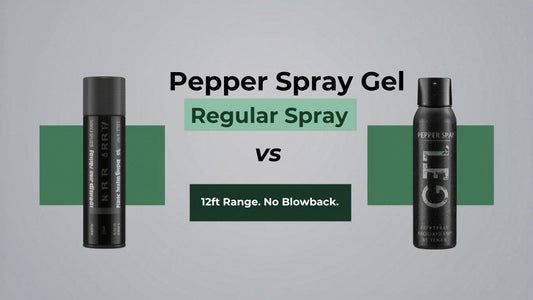
| Delivery | Thick stream, sticks on contact | Fine mist, disperses in air |
| Effective Range | 10–15 feet (JivanX: 12 ft) | 6–10 feet |
| Blowback Risk | Very low — gel does not become airborne | High — mist blows back in wind |
| Wind Resistance | Excellent — heavy stream cuts through wind | Poor — wind redirects the mist |
| Indoor Use | Safe — no airborne contamination | Risky — mist fills the room, affects everyone |
| Crowded Spaces | Safer — only hits the target | Dangerous — bystanders get affected |
| Accuracy | Requires aiming at the face | Wider spray pattern, easier to hit general area |
| Shelf Life | 3–4 years | 2–3 years |
| Decontamination | Harder to wipe off (sticks) | Easier to wash off |
| Price (India) | ₹199–399 | ₹136–299 |
| Legal in India | Yes — no license needed | Yes — no license needed |
Both types are completely legal in India with no license or permit required.
Why Blowback Matters More Than You Think
Blowback is the single most important factor that separates gel from spray — and the one most buyers ignore.
Here is what blowback means in practice. You are walking to your car after work. Someone approaches aggressively. You pull out your pepper spray and press the trigger. With an aerosol spray, the fine mist leaves the nozzle and immediately becomes vulnerable to air movement. If the wind is blowing towards you — even a light breeze — some of that mist comes right back into your eyes and lungs. You have just partially incapacitated yourself in the middle of a threat.
This is not a theoretical risk. It happens regularly. And in Indian cities, wind conditions are unpredictable — especially during monsoon months when gusts are common.
Gel eliminates this problem. The thick stream is heavy enough that wind does not redirect it. It travels in a straight line from your hand to the attacker's face. No particles float back towards you. No bystanders around you start coughing. No cross-contamination.
For Indian women who may need to use pepper spray in outdoor environments — parking lots, roads, bus stops — gel is the safer choice by a significant margin.
When to Choose Pepper Spray Gel
Gel is the better option if any of these apply to you.
You commute outdoors. If you walk to the metro, wait at bus stops, or cross open areas regularly, wind exposure is a reality. Gel performs consistently regardless of wind direction or speed.
You live in a monsoon-prone city. Mumbai, Kolkata, Chennai, Bangalore — if you deal with heavy rain and gusty weather for 3-4 months every year, aerosol spray becomes unreliable. Rain can dilute and redirect a fine mist. Gel cuts through rain because it travels as a solid stream, not airborne droplets.
You might need it indoors. Offices, lifts, auto-rickshaws, hostel corridors, apartment parking — these are enclosed spaces where aerosol spray would contaminate the entire area. Gel stays on the target. You do not gas yourself and everyone around you.
You want maximum range. Gel formulas typically reach 10-15 feet compared to 6-10 feet for aerosol sprays. The JivanX pepper spray gel reaches 12 feet, giving you critical distance between yourself and a threat. Those extra feet are the difference between spraying from safety and spraying while already being grabbed.
You are in a crowd. College campus, market, train station, concert — anywhere with people around you. Aerosol spray does not discriminate. A fine mist in a crowded area means innocent bystanders get hit. Gel hits only what you aim at.
You want longer shelf life. Gel formulas last 3-4 years versus 2-3 years for aerosol. If you are buying pepper spray as an "always carry, rarely use" safety tool, you want it to be effective when the moment comes — even if that moment is two years from now.
When to Choose Aerosol Spray
Aerosol spray is not without advantages. Here are situations where it might be the right choice.
You are worried about aim under pressure. This is the strongest argument for aerosol spray. The cone-shaped mist covers a wider area, which means you do not need perfect aim. In panic situations, fine motor skills deteriorate. If you are not confident in your ability to aim a stream at someone's face while terrified, the wider coverage of aerosol spray is forgiving.
You face multiple attackers. If two or three people are approaching, a wide spray pattern can affect all of them simultaneously. Gel requires you to aim at each person individually.
Budget is the only factor. Aerosol sprays start at ₹136 (IMPOWER). If your only constraint is price and nothing else matters, aerosol is cheaper. However, the ₹60-100 difference between the cheapest aerosol and a gel spray is a small price for significantly better performance.
You need immediate effect on a large area. In some scenarios — like a stray dog attack — covering a wider area quickly matters more than precision. Aerosol handles this better.
Indian-Specific Considerations
Most pepper spray comparisons online are written for American consumers. Indian conditions are meaningfully different, and those differences strongly favour gel.
Monsoon Season (June–September)
Four months of the year, much of India experiences heavy rain, high humidity, and gusty winds. These are the worst conditions for aerosol spray. Fine mist gets carried by wind gusts, diluted by rain, and becomes unreliable at any distance beyond 4-5 feet. Gel is largely unaffected by monsoon conditions — the heavy stream resists both wind and rain.
Crowded Public Spaces
India is dense. If you are using pepper spray on a Delhi Metro platform, a Mumbai local train, or a Bangalore bus stand, there are always people within a few feet of you. Aerosol spray in these settings will affect multiple innocent people — the OC particles hang in the air and spread outward. This creates chaos, makes the situation worse, and could even lead to legal complications if bystanders are seriously affected.
Gel eliminates this concern. The stream hits the target and sticks. No airborne particles. No collateral impact on people standing nearby.
Auto-Rickshaws, Cabs, and Enclosed Vehicles
A significant number of safety incidents involving women in India happen inside vehicles — auto-rickshaws, cabs, shared rides. These are tiny enclosed spaces. Discharging an aerosol spray inside an auto-rickshaw would fill the entire space with OC mist within seconds. You would be incapacitated along with the attacker, inside a vehicle you cannot easily exit.
Gel deployed in the same situation affects only the person you aim at. You remain clear-headed and able to escape the vehicle.
Compact Carry for Indian Lifestyles
Most Indian women do not carry large bags with dedicated self-defence compartments. Pepper spray needs to fit in a clutch purse, jeans pocket, or clip onto a keychain. The JivanX gel spray is designed with a compact keychain form factor specifically for this — it goes where you go without adding bulk.
What About OC Concentration?
Regardless of whether you choose gel or spray, the OC (Oleoresin Capsicum) concentration determines how effective the product actually is. Many brands sold in India do not disclose their OC percentage, which is a red flag.
A quality pepper spray — gel or aerosol — should have a verified OC concentration that has been lab tested. Look for products that mention government lab certification or provide specific concentration data. An uncertified pepper spray is a gamble with your safety.
How to Use Pepper Spray Gel Effectively
Gel requires slightly different technique compared to aerosol spray.
Aim for the face. Unlike aerosol spray that covers a wide area, gel needs to land on the attacker's eyes and nose for maximum effect. Aim for the T-zone — eyes, nose, mouth. At 12 feet of range, this is a manageable target even under stress.
Use a side-to-side motion. Instead of a single static burst, sweep the stream across the attacker's face in a horizontal line. This compensates for any aiming errors and increases coverage across both eyes.
Do not wait. The moment you feel threatened, create distance and deploy. Do not wait until the attacker is within arm's reach. The 12-foot range of gel spray exists precisely so you can engage from a safe distance.
Move after spraying. Spray and move. Do not stand and wait to see the effect. Deploy the gel, then immediately move away from the attacker and towards safety — a crowded area, a shop, a security guard, other people.
For a detailed guide, read our post on the best pepper spray options for women in India.
The Verdict: Gel Wins for Indian Conditions
For the average Indian woman — someone who commutes through crowded public spaces, deals with monsoon weather, might face a threat in an enclosed vehicle or narrow lane, and carries her safety tool in a compact purse — gel is the clearly superior choice.
The only scenario where aerosol has a meaningful advantage is the ease-of-aim factor. But modern gel sprays with 12-foot range give you enough distance and time to aim effectively, even under stress.
The price difference is negligible. The performance difference is not.
JivanX Pepper Spray — Built for Indian Emergencies
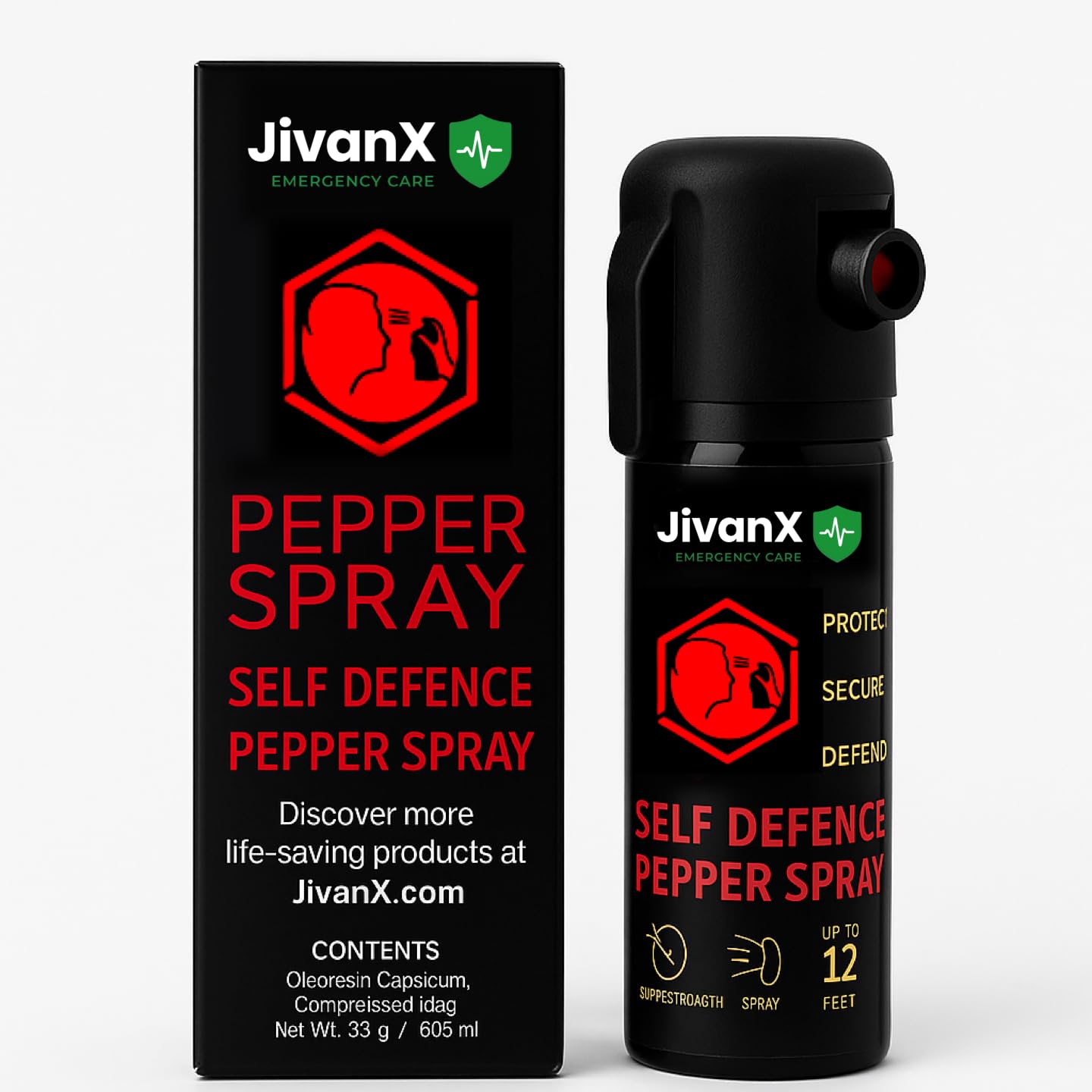
The JivanX Pepper Spray uses a gel-based formula with 12-foot range, compact keychain design, and verified OC concentration. Built by India's emergency care brand, it is engineered for the conditions Indian women actually face — not adapted from a foreign product for a foreign market.
Compact enough for a keychain. Powerful enough for real threats. Designed for Indian lives.
---
Frequently Asked Questions
1. Is pepper spray gel legal in India?
Yes. Both pepper spray gel and aerosol spray are completely legal in India. No license, permit, or documentation is required to buy, carry, or use either type. They are classified as self-defence tools, not weapons, under Indian law. Read our complete legal guide for details on carrying pepper spray on flights, trains, and metro.
2. Does pepper spray gel work in rain and monsoon?
Yes, and this is one of its biggest advantages over aerosol spray. Gel travels as a heavy stream that is not affected by rain or humidity. Aerosol spray, being a fine mist, can be diluted and dispersed by rain and wind. For anyone living in monsoon-heavy cities like Mumbai, Kolkata, or Chennai, gel is the more reliable option during the rainy season.
3. Can I use pepper spray gel inside an auto-rickshaw or car?
Yes. Gel is significantly safer to use in enclosed spaces compared to aerosol spray. Because gel does not release airborne particles, it will not fill the vehicle with OC and affect you along with the attacker. Aerosol spray in an enclosed vehicle would incapacitate everyone inside — including you.
4. Is pepper spray gel harder to aim than regular spray?
Gel requires you to aim at the attacker's face, while aerosol spray covers a wider area with less precision needed. However, gel sprays with 12-foot range give you enough distance to aim calmly. The technique is simple — aim for the face and sweep horizontally. Most people find that with even basic awareness of how to use it, gel is not difficult to deploy effectively.
5. Which pepper spray type is better for college students?
Gel is the better choice for college students. Campus environments involve hostels, corridors, classrooms, and crowded walkways — all situations where aerosol spray risks affecting bystanders and contaminating shared spaces. A compact gel spray on a keychain is easy to carry daily, safe to use in enclosed areas, and does not create the legal and practical complications of gassing a hallway full of students.
Tags:
Previous
Best Anti-Choking Device in India (2026) — Complete Buyer's Guide & Comparison
Next
Pepper Spray Side Effects — What Happens, How Long It Lasts & First Aid