Introduction
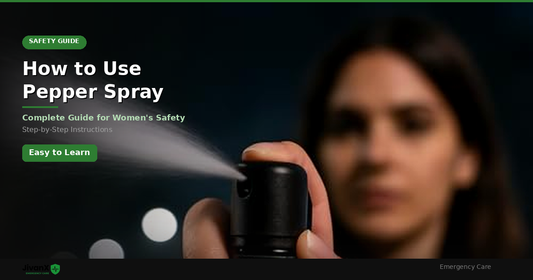
You've decided to carry pepper spray. Smart choice. But now you're faced with a question nobody explains properly: should you buy a gel or a regular (liquid/stream) pepper spray? The difference matters more than most people realize — especially in India's crowded metros, narrow lanes, and unpredictable public spaces.
In this guide, we break down exactly how pepper spray gel works, how it compares to regular pepper spray, and which one is actually better for Indian women carrying it daily.
What Is Regular Pepper Spray?
Regular pepper spray (also called a stream or liquid spray) releases a fine mist or a narrow liquid jet of Oleoresin Capsicum (OC) — the active ingredient that causes intense burning in the eyes, nose, and throat.
How it works: Press the nozzle → liquid propelled out as mist or stream → OC particles land on attacker's face and penetrate eyes and respiratory tract
Effects: Extreme eye pain, temporary blindness, difficulty breathing
Most budget pepper sprays sold on Amazon India (₹75–₹250 range) are liquid sprays.
What Is Pepper Spray Gel?
Pepper spray gel is a newer formulation where the OC compound is suspended in a thick, sticky gel instead of liquid.
How it works: Press the nozzle → gel shoots out in a targeted stream (like a thick ribbon) → The gel sticks to the attacker's face instead of dispersing into the air
JivanX pepper spray uses a gel formula with a 12-foot range — one of the longest available in India.
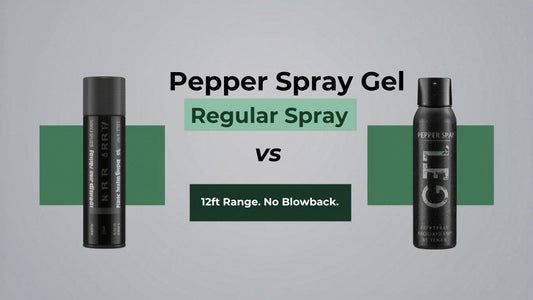
Gel vs Regular Pepper Spray: Key Differences
- Range: Gel 10–15 feet | Regular 6–10 feet
- Blowback risk: Gel — very low (gel doesn't drift) | Regular — HIGH (wind can send it back at you)
- Accuracy: Gel — precise stream, stays on target | Regular — mist disperses widely
- Indoor use: Gel — safe, doesn't contaminate air | Regular — risky, fog fills the space
- Sticks to attacker: Gel — yes, harder to rub off | Regular — no, washes off easily
- Effective in crowded areas: Gel — much safer | Regular — can affect bystanders
- Price (India): Gel ₹300–₹800 | Regular ₹75–₹300
Why Blowback Is a Serious Problem in India
Blowback is when the spray drifts back toward you — from wind, ceiling fans, or vehicle AC vents. In Indian conditions, this is a real and underappreciated risk.
Imagine spraying a liquid pepper spray in an auto-rickshaw, a bus, or a narrow stairwell. The mist spreads — affecting the entire space, including you.
Gel eliminates this. The formula is thick enough that it doesn't aerosolize. It shoots straight, sticks to the target, and stays there.
The JivanX Difference: Why We Chose Gel
JivanX pepper spray was designed for real Indian self-defense scenarios:
- 12-foot range — longer than most regular sprays on the market
- Zero blowback risk — safe to use indoors, in vehicles, and in tight spaces
- Sticks to attacker — gives you more time to escape
- Compact keychain design — fits your bag strap or pocket
- Verified OC concentration — not a watered-down formulation
Frequently Asked Questions
Is pepper spray gel legal in India?
Yes. Pepper spray (gel or regular) is completely legal to carry and use for personal self-defense in India under Sections 96–106 of the IPC. No license required.
Which is better — pepper spray gel or stream?
Gel. It has longer range, no blowback, and sticks to the target. Stream is better than mist but still has blowback risk in windy conditions.
Can I use pepper spray gel indoors?
Yes — gel is specifically safer for indoor use because it doesn't create a cloud. It shoots straight and stays where it lands.
Conclusion: Gel Wins for Indian Conditions
Regular pepper spray was the only option for decades. Gel is a better formula for the same purpose — more accurate, safer to use indoors, and more effective at stopping an attacker.
For Indian women commuting in metros, buses, college campuses, or late-night walks — gel is the smarter choice.
Shop JivanX Pepper Spray Gel →
Tags:
Previous
घुटन (Choking) में क्या करें — भारत 2026 के लिए संपूर्ण प्राथमिक उपचार गाइड
Next
Best Pepper Spray in India 2026: Complete Buyer's Guide & Comparison